
The National Fire Protection Association (NFPA) has called for updated codes, training and global collaboration to ensure safety keeps pace with EV technology.
According to research from the International Energy Agency (IEA), EV adoption is accelerating worldwide, with global sales exceeding 17 million in 2024, accounting for more than 20% of sales. With the increase in sales, a range of new and unique fire risks are posed, particularly in high-density environments such as residential and commercial parking structures.
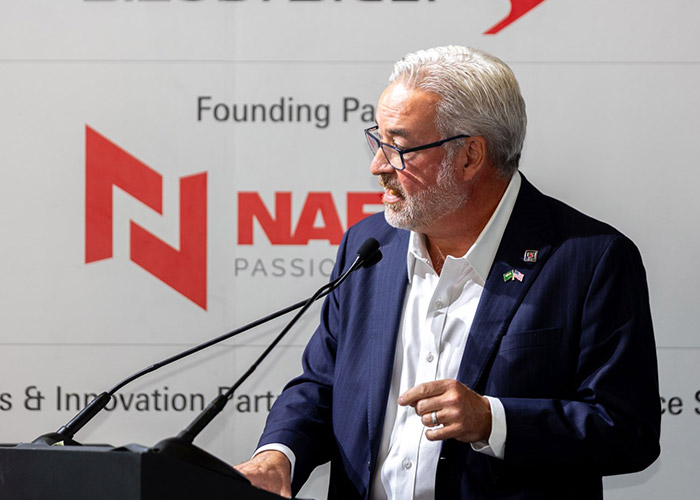
Mike Brunzell, VP of Global Business Development, National Fire Protection Association (NFPA) said, “One of the major concerns we face is the risk of thermal runaway in lithium-ion batteries. While the data shows us that EV fires occur less frequently than fires in gas or diesel-powered vehicles, the research also shows that when they do occur, they can present unique and difficult challenges including longer burn durations, high heat release, toxic gases, re-ignition risks and significant water demand for suppression.”
Brunzell said, “Through the NFPA’s Fire Protection Research Foundation, extensive studies have been conducted on vehicle fire dynamics, suppression strategies and ventilation design. Findings reveal that modern vehicles contain significantly higher plastic content, increasing from less than 3% of vehicle weight in the 1970s to nearly 10% today, resulting in greater combustible fuel loads. The increased use of electronic components and complex wiring systems also introduces new ignition risks.
Brunzell emphasised the importance of evolving codes and standards to keep pace with technology: “It is through the development of our codes and standards, research initiatives and training programmes that NFPA is proactively working to provide the guidance and the resources needed by fire protection professionals, property owners and policymakers to ensure the integration of EV infrastructure safety strategies.”
Notable NFPA codes include the NFPA 88A (Standard for Parking Structures), which requires sprinkler protection for all parking structures, with higher densities set by NFPA 13. NFPA 855 (Standard for the Installation of Stationary Energy Storage Systems) addresses the risks associated with energy storage installations, including fire suppression and thermal runaway. The NFPA 800 Battery Safety Code is currently under development.