

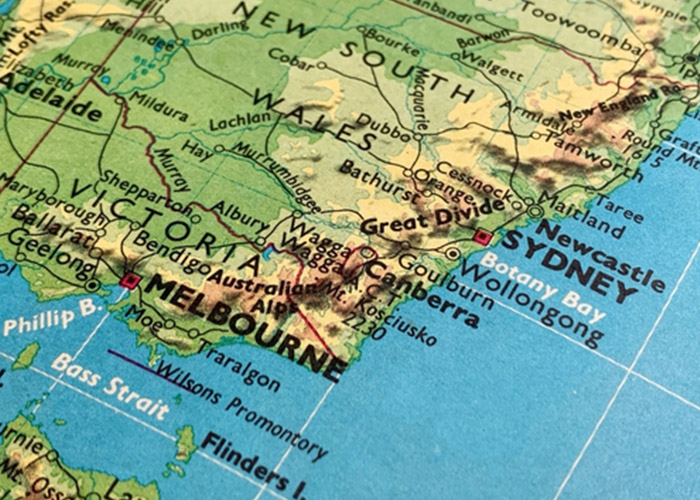
Telstra has activated the Sydney-Melbourne coastal leg of its new fibre network, now called the Aura Network, a critical milestone in Telstra’s $1.6 billion investment aimed at powering Australia’s digital future.
Global network traffic is predicted to increase five to nine times by 2033[1], driven by increasing demand for AI, cloud, and data-driven services, this network forms a critical foundation for the nation’s long-term economic and technological progress.
Connecting Australia’s two largest cities with unprecedented capacity, the new Sydney to Melbourne route will unlock major productivity gains, boost national resilience, and ensure the country is ready for the next wave of digital transformation. With live tests between Sydney and Canberra delivering 700 gigabits per second on a single fibre channel and desktop simulated total capacity of 83.6 terabits per second over 1,200 kilometres, the network sets a new benchmark for speed and scale.
Telstra CEO Vicki Brady said the Aura Network would give businesses and communities the confidence to grow and share in the opportunities of a thriving digital economy.
“As a nation, we have big priorities: making AI a national focus, building a skilled and adaptable workforce, and securing Australia’s economic potential on a global stage. None of that is possible without world-class digital infrastructure,” Ms Brady said.
“This network represents a bold ambition. It’s not just fibre in the ground – it is a backbone for innovation, productivity and resilience that helps future proof Australia for decades to come.”
Ms Brady said with Australia generating more data than ever before – through generative AI, connected infrastructure, and other tech advancements – it needed robust, high-speed connectivity to support businesses in cities and across the regions who are innovating for tomorrow.
“The Aura Network will help deliver the connectivity Australian entrepreneurs and innovators need to build the solutions to power Australia’s future.”
The enhanced connectivity will also empower digital services providers, hyperscalers, and early adopters such as foundational partner Microsoft to tap into Australia’s rapidly expanding digital markets, with the new Sydney-Melbourne route covering more than 80 operational data centres. It will also help non-tech industries adopt data-driven solutions – from driverless trucks in mining and smarter farming practices in agriculture, to real time imaging in healthcare, more immersive learning in education, and supporting Australia’s defence and national security through improved network resilience and diversity.
In simulated testing, the network has achieved groundbreaking fibre capacity of 83.6 terabits per second over 1,200 kilometres. Based on conservative real-world estimates, this translates to an estimated 35 times more capacity per path than standard carrier networks, along with an estimated 50% improvement in resiliency.
The activation of the Sydney to Melbourne coastal route follows the June launch of the Sydney to Canberra coastal leg and the completion of the latest leg, Canberra to Melbourne coastal, and forms part of the 5,000km of network built to-date.
Additional routes connecting Adelaide, Perth and Brisbane will come next.
[1] Source: Nokia’s Global Network Traffic Report, Nokia: Global Network Traffic Report