

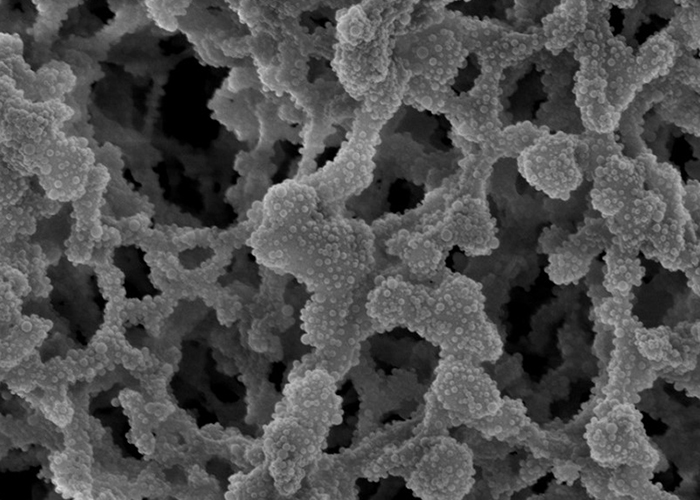
As cities grapple with mounting plastic waste and tightening water quality standards, researchers at Flinders University say they have developed a potential new tool to detect — and possibly filter — nanoplastics in drinking water.
In a proof-of-concept study published in Analytica Chimica Acta, the team outlines a method that uses plasma polymer-coated filters to capture and quantify nanoplastic particles in water samples. The work addresses a growing blind spot in urban water monitoring: particles too small to be seen, and too small for many conventional filtration and detection systems to reliably isolate.
Nanoplastics, typically defined as plastic fragments ranging from around one micron down to a few nanometres, are generated through the breakdown of larger plastic waste. Their size makes them particularly difficult to identify and separate in complex environments such as drinking water networks, wastewater systems and stormwater flows.
Associate Professor Melanie MacGregor, senior co-author of the study, says the scientific community still lacks a clear picture of how widespread nanoplastics are in water supplies. The problem, she notes, is methodological as much as environmental.
“There are huge gaps in our understanding of nanoplastics presence and accumulation in water,” she says, pointing to the technical challenges of isolating particles at such small scales.
Lead author Manpreet (‘Preet’) Kaur, a PhD candidate with the Nano and Microplastics Research Consortium at Flinders, argues that while methods exist for isolating microplastics — particles up to five millimetres in size — equivalent standards for nanoplastics remain underdeveloped.
“There is no standard or validated method for detection and quantification specifically for nanoplastics in drinking water and other liquids,” she says. Existing techniques often rely on advanced instrumentation, high pressure systems or complex laboratory processes, which can be costly and inconsistent. In addition, detection methods can produce misleading results if researchers cannot confidently confirm that the isolated material is plastic.
The Flinders team’s approach centres on engineered plasma polymer coatings designed to act as selective surfaces. The coatings are tailored to attract nanoplastic particles based on surface affinity, allowing them to be separated from the surrounding water before analysis. By isolating particles first, the researchers claim they can reduce the uncertainty that has affected earlier measurements.
Once captured, the particles are analysed using thermogravimetric analysis, which measures how materials degrade when heated. According to co-author Dr Iliana Delcheva, plastics exhibit distinct thermal responses, enabling researchers to confirm whether the isolated material is in fact plastic and potentially distinguish between polymer types.
For smart city planners and water authorities, the implications are twofold. First, improved detection could help utilities quantify nanoplastic loads in drinking water systems more accurately, informing risk assessments and treatment strategies. Second, selective capture technologies could eventually be integrated into advanced filtration stages — though the current study stops short of demonstrating large-scale deployment.
The research remains at proof-of-concept stage and does not yet address scalability, operational costs or compatibility with existing municipal water infrastructure. Any transition from laboratory method to treatment plant technology would require further validation, regulatory assessment and cost modelling.
Nevertheless, the work reflects growing pressure on urban water systems to respond to emerging contaminants. As analytical tools improve, utilities may face greater scrutiny over substances that were previously undetectable.
The study, supported by the Australian Research Council, highlights a broader shift in environmental monitoring: as detection limits fall, the policy and public health debate increasingly turns not only on what is present in water, but at what concentration it becomes a risk.
For now, the Flinders team’s contribution lies in narrowing the measurement gap. Whether that translates into practical filtration solutions for cities will depend on the next phase of research — and on how regulators choose to define acceptable levels of nanoplastic exposure in the first place.