

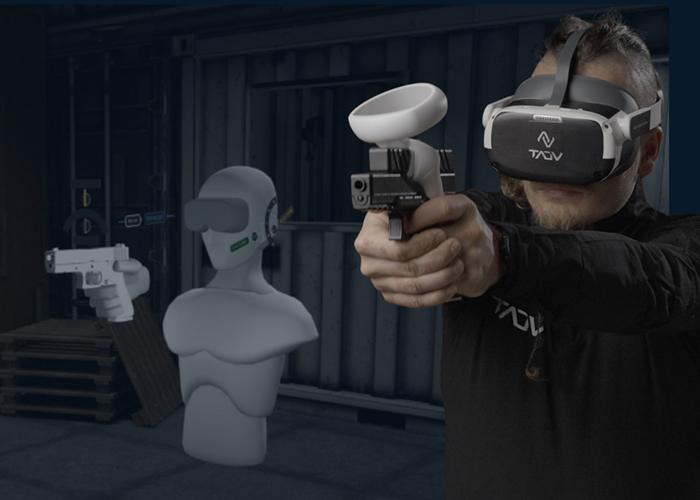
Eyeviation is bringing its AI-powered VCAT™ Virtual Cognitive-Aware Training system into civilian shooting ranges and sport shooting environments, introducing what the company describes as the world’s first cognitive-aware firearms training platform outside military and law enforcement use.
Announced in January 2026, the expansion marks the first time training methodologies developed for elite military and law enforcement units have been adapted for civilian firearms training at scale. Already operational with select units in Israel and the United States, VCAT is designed to train not only physical shooting mechanics, but the underlying cognitive and visual processes that drive performance and decision-making.
Unlike traditional firearms training systems that assess outcomes only after a shot is fired, VCAT focuses on the full shot cycle, including target acquisition, engagement sequencing and post-shot recovery. The platform measures and trains factors such as visual attention, decision timing, vision management and cognitive load, providing insights that were previously difficult or impossible to quantify.
For smart cities and modern training environments, the system offers a way to improve safety, accessibility and efficiency. VCAT enables training without live fire, ammunition or dedicated firing lanes, allowing ranges to operate in smaller footprints, reduce noise and safety risks, and increase training throughput. A single operator can supervise multiple trainees simultaneously, supporting high-frequency micro-training while lowering operational costs.
By making cognitive performance visible and measurable, the platform helps instructors identify skill gaps earlier, shorten time to proficiency and reduce training plateaus. Eyeviation said this approach mirrors how elite units accelerate skill acquisition and maintain readiness, now adapted for civilian and recreational contexts.
Eyeviation CEO Or Landwer said the system represents a shift in how firearms training is structured, moving beyond hardware-focused instruction toward data-driven understanding of human performance. He said bringing cognitive training into civilian environments allows shooters to focus on the factors that most directly influence improvement.
From a smart cities perspective, the technology highlights how AI-driven simulation and human-aware training systems can support safer civilian skills development, reduce reliance on live-fire infrastructure and integrate more effectively into urban environments where space, noise and safety constraints are critical considerations.
Eyeviation will showcase VCAT to the civilian market in Las Vegas later this month, as part of its broader strategy to expand human-aware AI training systems beyond defence and law enforcement into commercial and recreational domains.