

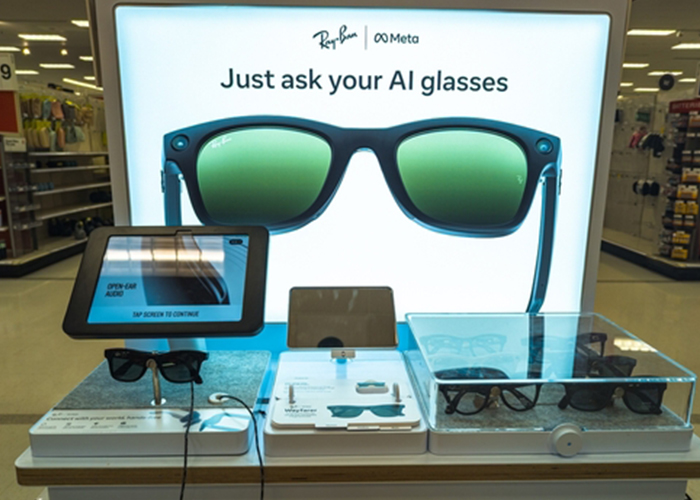
Global shipments of AI-enabled smart glasses reached a record 4.2 million units in the first half of 2026, up 127% year-on-year, according to new data from research firm Omdia.
Omdia said the category remains nascent, with growth “stabilizing as the market expands from a very low base”, while competition is intensifying across different frame designs and the segment is facing increasing scrutiny over user privacy.
Omdia senior analyst Qiran Ju attributed the first-half growth to “Meta’s continued market momentum” and new entrants from China, adding that vendors have focused on features such as hands-free photo and video capture, open-ear audio and AI assistance in everyday eyewear designs.
Meta shipped 3.4 million AI glasses in 1H26, giving it an 81.3% market share, according to Omdia. The firm said smaller competitors also contributed to overall growth by pursuing alternative frame designs and targeted use cases.
Omdia said Even Realities rose from fifth place in 2H25 to second in 1H26, shipping 102,000 units for a 2.4% market share, driven by demand for its G2 series in North America and Western Europe.
Ju said Even Realities differs from many rivals by removing cameras and speakers, and instead focusing on a slimmer design, a monochrome display and productivity features such as real-time transcription.
Omdia said the United States remains the largest AI glasses market, while Mainland China is becoming increasingly influential as both a supply-chain hub and a testbed for new hardware configurations. Shipments in China grew 306% year-on-year in 1H26 as local vendors experimented with display, camera and audio setups, but the market remained fragmented, with Alibaba, INMO and Xiaomi accounting for a combined 46.1% of shipments.
Omdia research director Jason Low said China’s market signals suggest there will not be a single standard design for AI glasses globally as the category diversifies across form factors and feature sets.
Low also pointed to privacy as a key factor shaping market fragmentation, arguing that as scrutiny of camera-equipped AI glasses increases, companies will need to be clearer about what always-on cameras capture, how content is used and whether data is shared with third parties.