

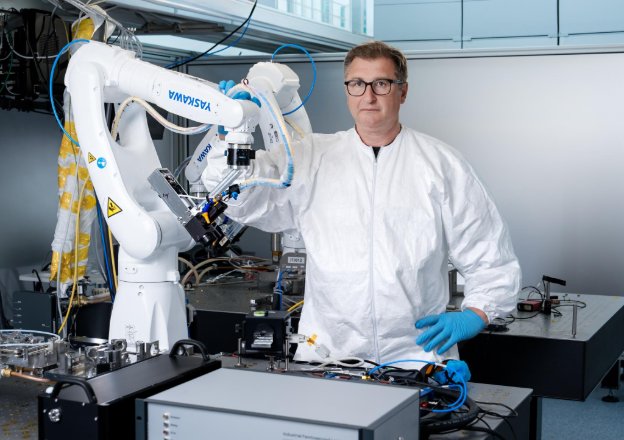
Apple is expected to unveil its first foldable iPhone on September 9, a launch that would test whether foldable devices can withstand hundreds of thousands of folds without cracking, according to a media release from Lithuanian femtosecond laser manufacturer LITILIT.
The company argues that durability constraints in foldable devices are increasingly linked to manufacturing tolerances, as components such as ultra-thin glass, flexible display layers, printed circuit boards, ceramics and semiconductor parts are produced at smaller scales.
Nikolajus Gavrilinas, LITILIT’s co-founder and CEO, pointed to previously published Apple patents describing locally thinned glass, down to 10–50 microns at the fold. He said such designs—if used in a commercial device—would require cutting and processing methods that avoid cracks and heat damage. The release also highlighted risks for flexible plastic layers under displays, where rough or heat-damaged edges could develop into tears after repeated folding.
“The market for electronic components keeps pushing manufacturing closer to its limits. In consumer electronics, even a tiny defect can turn into a crack that makes the whole component unusable,” Gavrilinas says. “Femtosecond lasers solve these problems by using pulses so short that material evaporates before heat can spread, allowing them to process delicate components close to active circuitry without leaving heat damage or debris that could cause short circuits.”
The release said femtosecond lasers are used to process components without overheating surrounding material because their pulses last a quadrillionth of a second. Gavrilinas said the approach is suited to OLED display manufacturing, where multi-layer stacks can be affected by microscopic heat damage.
LITILIT also flagged supply constraints for femtosecond lasers, describing manufacturing as specialist-dependent and time-consuming, with rising demand from consumer electronics as well as semiconductor production and data centre equipment manufacturing.
“To solve the scalability issue, we built them from the ground up with that in mind. Our lasers have reduced component complexity, modular design, and high-level automation, which results in faster manufacturing as well as easy integration into factories that manufacture parts for consumer electronics,” Gavrilinas explains.
According to the company, it began building a high-capacity femtosecond laser factory in June and expects production to start “in a few months”. It said it plans to manufacture around 1,000 lasers in the first year, with a longer-term target of 3,000 annually, and that it is planning to expand production to other countries with international partners.