

By Kiran Pillai, Vastuta
Smart cities have often been described through visible technologies: intelligent traffic lights, surveillance cameras, connected streetlights, digital payments and public Wi-Fi. But the next stage of urban digital infrastructure may depend on something less visible: where computing happens.
Edge computing moves data processing closer to the location where data is generated. Instead of sending every piece of information to a distant cloud data center, some processing can happen locally at an edge device, local server or nearby infrastructure facility.
For cities, this can have significant implications.
Consider traffic management. Thousands of cameras and sensors can continuously generate information about vehicles, pedestrians and road conditions. Sending all of this information to a distant data center can create additional network traffic and delay. Local processing can identify relevant events and transmit only the information that requires centralized analysis.
The same principle can apply to public transportation.
Buses, railway systems and traffic infrastructure can increasingly generate real-time information. Edge computing can help process this information closer to the transport network, potentially supporting faster responses to congestion, equipment problems and changing passenger demand.
Public safety is another area where local processing can become important. Cameras and sensors may need to identify unusual events quickly. Edge infrastructure can reduce the amount of raw information that needs to travel across the network before an initial response is generated.
This does not mean cloud computing will become less important.
Instead, smart cities are likely to develop a combination of cloud and edge infrastructure. Large-scale analytics, long-term storage and complex artificial intelligence models can remain centralized, while time-sensitive processing happens closer to the physical environment.
This creates a new infrastructure architecture for cities.
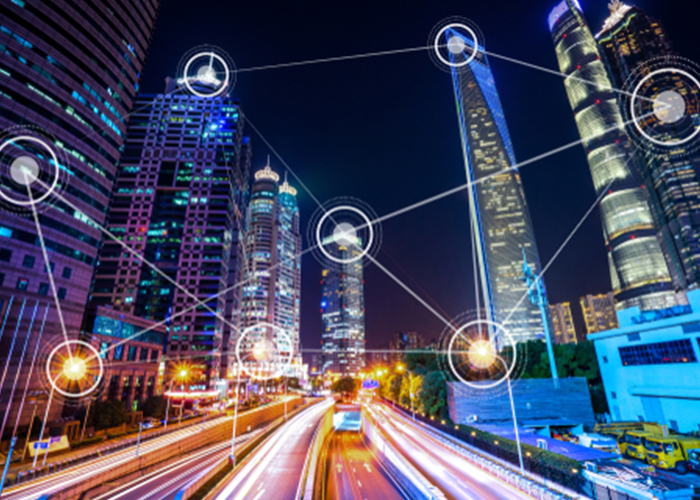
Instead of thinking about a city as a collection of disconnected sensors sending information to a central data center, planners can begin thinking about distributed computing infrastructure embedded throughout the urban environment.
Street cabinets, telecommunications facilities, transport hubs, public buildings and other locations could potentially host computing resources.
However, deployment presents challenges.
Edge infrastructure needs electricity, physical security, cooling, network connectivity and maintenance. Thousands of distributed computing locations could be significantly more difficult to manage than a small number of centralized data centers.
Cybersecurity also becomes more complicated. Every edge location can represent another potential point of attack. Smart-city infrastructure therefore needs strong authentication, encryption, monitoring and software management.
There is also an economic question.
Cities should not deploy edge computing simply because it is a fashionable technology. Each application should demonstrate a clear benefit. Faster traffic management, reduced network costs, improved public services or better infrastructure monitoring can provide practical justification.
India has an opportunity to approach this strategically.
Many Indian cities are already investing in digital public infrastructure, intelligent transportation systems, surveillance networks and connected utilities. Instead of developing each system independently, cities could create common digital infrastructure capable of supporting multiple applications.
This could reduce duplication and make urban technology investments more scalable.
The long-term objective should be to create cities that can sense, process and respond to changing conditions more effectively.
Cloud computing provided the foundation for centralized digital services. Edge computing adds another layer by bringing intelligence closer to the physical world.
As cities become more connected, the boundary between physical infrastructure and computing infrastructure will increasingly disappear.
The smart city of the future will not simply contain more sensors.
It will contain a distributed computing network capable of turning information from those sensors into faster and more useful decisions.