
The Australian National University (ANU) has been selected as a recipient of the Google.org Impact Challenge: AI for Science initiative, securing US$2.2 million for research focused on chemotherapy resistance.
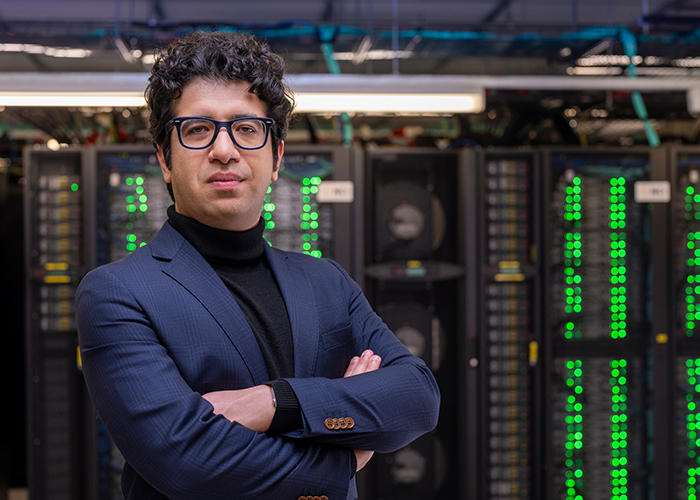
The collaboration, led by Dr Eli Niktab, Principal AI Engineer at ANU’s National Centre for Indigenous Genomics (NCIG), aims to build a “Cytotoxic Resistance Atlas” described as an open molecular map of cancer cell lines that survive chemotherapy.
According to ANU, the project will use a two-tier AI system to identify genomic mechanisms behind cancer resistance in tumour samples, with intended use cases including routine hospital and pathology laboratory workflows.
The project includes partners and facilities across research, healthcare and industry, including NCIG and the John Curtin School of Medical Research (JCSMR) node of the Joint Mass Spectrometry Facility at ANU; the Resistant Cancer Cell Line collection at the University of Kent; Canberra Hospital; PacBio; the Victorian Cancer Biobank; and the National Computational Infrastructure (NCI) in Canberra.
“AI models are getting better at an unprecedented speed, but biological data to teach AI what causes chemotherapy resistance does not exist, and this is what we are generating, at the resolution needed, for the first time,” Dr Niktab said.
ANU said it was one of 17 organisations selected globally from more than 3,000 applicants across 30 countries.
The release argues that while genomics has changed some areas of cancer medicine, it still rarely provides clear guidance to oncologists on which conventional chemotherapy will work for an individual patient, citing the diversity and adaptability of resistance mechanisms between tumours and individuals.
ANU also positioned the work as addressing limitations in existing genomic tests, including the representation of different ancestries in underlying datasets. “Existing tests have been developed almost entirely using genomic and clinical data from patients of European ancestry,” Dr Niktab said.
ANU said the models would be trained in Australia on Gadi, the national supercomputer hosted by NCI in Canberra, and that the atlas data, AI models and software would be made free to use for researchers.
The Google.org Impact Challenge recipients were announced at the Google.org EMEA Impact Summit in Dublin, Ireland. Leslie Yeh, Director of Scientific Progress at Google.org, said the organisation was supporting ANU’s work applying AI to chemotherapy resistance.