

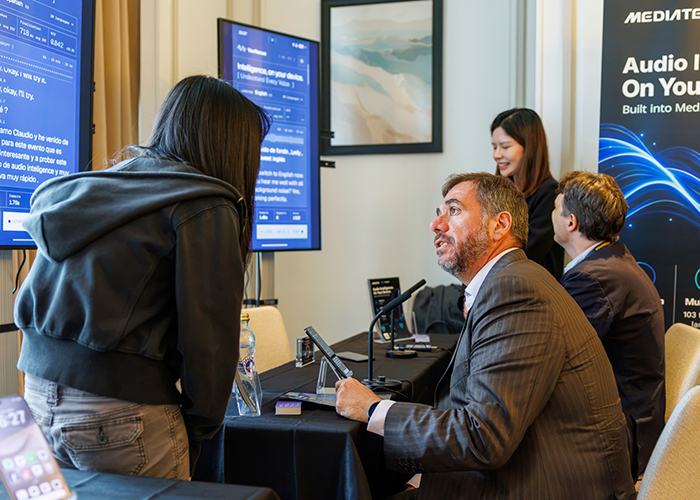
VoxNexus has released VoxEdge, an on-device voice stack designed to bring speech recognition, translation and speech synthesis to lower-cost Android devices without requiring an internet connection.
According to the company, VoxEdge supports speech recognition in 36 languages, translation in 103 languages and speech synthesis in 45 languages, with processing performed locally on the handset rather than in the cloud.
The announcement targets a persistent limitation for voice-based AI in parts of Africa and other regions where connectivity and data costs can be barriers. VoxNexus said voice AI has been constrained by limited training data for “under-resourced” languages, alongside everyday code-switching and dialect variation, and that cloud inference costs can make large-scale deployments expensive.
VoxNexus said its models run entirely on-device and that “every query is free once the model is installed on the device.” It also claimed its speech recognition model has as few as 65 million parameters and achieves a lower word error rate than open-source models nearly ten times its size.
“Under-resource languages aren’t small languages. Hundreds of millions of people speak them. Until now, AI models just haven’t learned them yet,” said Charles Shi, CEO of VoxNexus.
The company also launched VoxSense, an on-device ambient listening product aimed at always-on use. VoxNexus said VoxSense uses 162 mAh for 12 hours of continuous listening, which it described as about 2.5% of a 6,500 mAh phone battery. The company said keeping processing on-device avoids sending audio to the cloud and reduces battery drain.
VoxNexus said developers and device makers can integrate VoxSense through a licence and SDK, and that VoxSense and VoxEdge were unveiled at the MediaTek Dimensity 9600 launch event in Madrid on October 19.