
Flinders University researchers have secured $1.15 million in federal funding to advance a quantum computing-based energy management system aimed at improving electricity reliability in remote communities.
The project, valued at $1.45 million in total, will develop a quantum-powered demonstrator designed to address the computational complexity of managing isolated and high-cost energy systems. Funding comes through the Australian Government’s Critical Technologies Challenge Program, which is backing eight Stage 2 projects to move feasibility studies toward working prototypes.
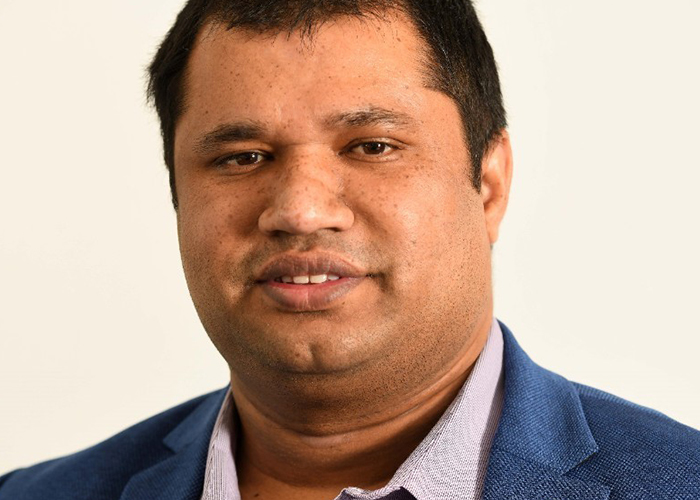
Led by Professor Apel Mahmud (pictured) from Flinders University’s College of Science and Engineering, the research will apply quantum optimisation and machine learning techniques to improve forecasting and control of remote energy networks. The work builds on earlier feasibility research and will be conducted in collaboration with industry partners EfficientSee and Zeco Australian Energy Solutions, along with researchers from two other Australian universities.
Remote energy systems — particularly those serving rural and First Nations communities — often rely on diesel generation, face high operating costs and operate with limited redundancy. Managing these systems involves complex optimisation challenges: balancing variable renewable inputs, storage constraints, load forecasting and reliability requirements in environments with limited technical support.
Professor Mahmud says the project will develop a digital twin of remote energy systems and integrate it into a working prototype to test the real-world viability of quantum approaches. The goal is to create a scalable model that could be adapted to remote communities globally.
Proponents of quantum computing argue that certain classes of optimisation problems — including those found in energy management — could be solved significantly faster and potentially with lower energy consumption than classical supercomputers. A quantum computer, in theory, can complete calculations in minutes that would take conventional high-performance systems days, while consuming far less power.
However, practical deployment remains in early stages. Questions persist about which quantum architectures will prove scalable, reliable and energy-efficient in real-world applications. The World Economic Forum has recently called for governments and industry to focus not just on computational scale but “energy scalability” — identifying platforms that deliver the highest computing power per kilowatt-hour.
The Flinders project sits alongside a second federally funded initiative led by La Trobe University, which is focused on quantum-enhanced optimisation for energy-efficient data centres. Together, the programs reflect growing interest in applying quantum technologies to infrastructure challenges, particularly as global electricity demand accelerates.
The International Energy Agency expects electricity consumption from data centres to roughly double by 2030, driven in part by artificial intelligence workloads. While quantum computing is frequently cited as a lower-energy alternative for certain computational tasks, large-scale, fault-tolerant systems are not yet commercially available, and the energy profile of different quantum platforms varies significantly.
Beyond remote communities, the Flinders team says its model could support off-grid agricultural operations, urban microgrid management, disaster resilience planning and defence or emergency deployments.
Industry and Science Minister Tim Ayres described quantum technologies as having the potential to boost productivity and local industry. Whether that potential translates into operational systems for remote energy networks will depend on how effectively researchers can move from controlled demonstrators to deployable infrastructure in challenging environments.
For now, the project represents a step toward testing whether quantum optimisation can deliver measurable improvements in sustainability, cost and reliability for some of Australia’s most energy-constrained communities.