

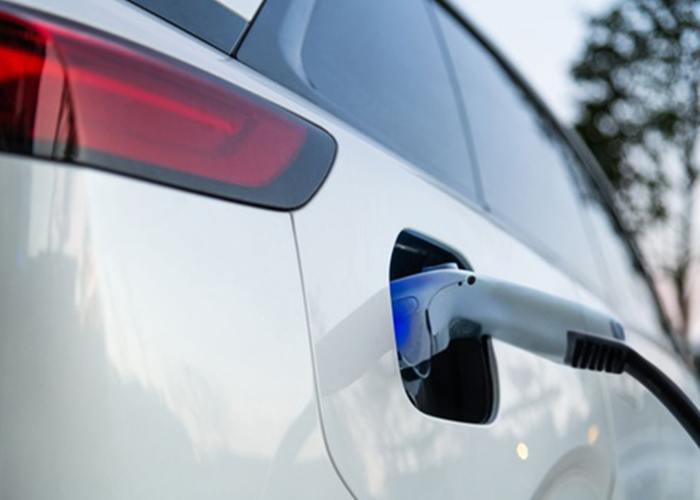
An Australian study has found electric vehicles (EVs) equipped with vehicle-to-home (V2H) technology can reduce household electricity costs and lower the need for large home battery systems, by using the EV as a mobile energy storage unit.
Researchers from Flinders University, Adelaide University and Murdoch University examined how V2H affects the optimal sizing of rooftop solar (PV) and home battery storage for grid-connected homes. V2H allows households to draw power from an EV battery to run appliances during peak-demand periods, reducing grid imports and improving solar self-consumption.
The study modelled three residential setups: solar plus battery plus EV with V2H; solar plus EV; and EV only. Under the most efficient configuration—solar plus battery plus an EV with V2H—the researchers reported that a 7kW solar system paired with a 9kWh home battery produced the lowest annual electricity cost of $2,451.
In that scenario, the cost of electricity fell to 27 cents per kWh and grid electricity imports dropped by 78% compared with a home without solar or battery storage, according to the study.
When V2H was removed, the home required a larger 13kWh battery to achieve similar performance, and annual electricity costs increased by 10.8%.
Lead researcher Golsa Azarbakhsh from Flinders University said the findings point to EVs playing a role beyond transport. “Our work shows that enabling electric vehicles with V2H technology can play an important role in supporting renewable energy use in homes,” said Ms Azarbakhsh, a PhD candidate at Flinders University’s College of Science and Engineering Tonsley campus.
“Vehicle-to-home capability can reduce the need for dedicated home battery storage while lowering household electricity costs by about 6.8%.”
Adelaide University collaborator Dr Solmaz Kahourzade said the results were relevant for South Australia, where rooftop solar uptake is high but reliance on the grid remains during peak times. “South Australia already has some of the highest rooftop solar uptake in the world, but many households still depend heavily on the grid during peak times,” according to Dr Kahourzade.
“If we want to accelerate electrification and reduce energy bills at the same time, V2H is one of the strongest tools available.”
The analysis used Adelaide household load profiles, local weather data and real electricity tariffs, and included uncertainties such as EV arrival and departure times and battery charge levels. It also incorporated South Australia’s 1.5kW export limit for residential solar systems.
Under those conditions, the researchers reported V2H delivered year-round benefits, particularly during winter when solar output is lower. The team said future work could explore workplace and public charging, or apply the model to higher-density housing such as apartment buildings.
The paper, titled ‘Impact of Vehicle-to-Home Integration on Optimal Capacity of Solar Battery System for Houses’, was recently presented at the Australasian Universities Power Engineering Conference (AUPEC). DOI: 10.1109/AUPEC66173/2025.11219607