

Researchers from the Australian Research Council Centre of Excellence in Optical Microcombs for Breakthrough Science (COMBS) say they have developed a new method for using “twisted light” to measure minute changes in biological fluids such as blood using extremely small sample volumes.
The work, led by teams at Adelaide University, RMIT University and the University of St Andrews in the UK, aims to improve the sensitivity and speed of liquid analysis in situations where only limited sample volumes are available, and could support compact “lab-on-a-chip” devices for real-time testing.
The approach relies on light beams that spiral as they propagate, a structure that gives the light orbital angular momentum. According to the researchers, measuring the extent of this twisting has been a longstanding barrier for precision sensing applications.
They report overcoming that constraint by analysing speckle patterns—the interference patterns produced when light scatters through material—to calculate the twist with greater precision than existing methods. “We can now detect extremely small changes that were previously invisible,” the release said.
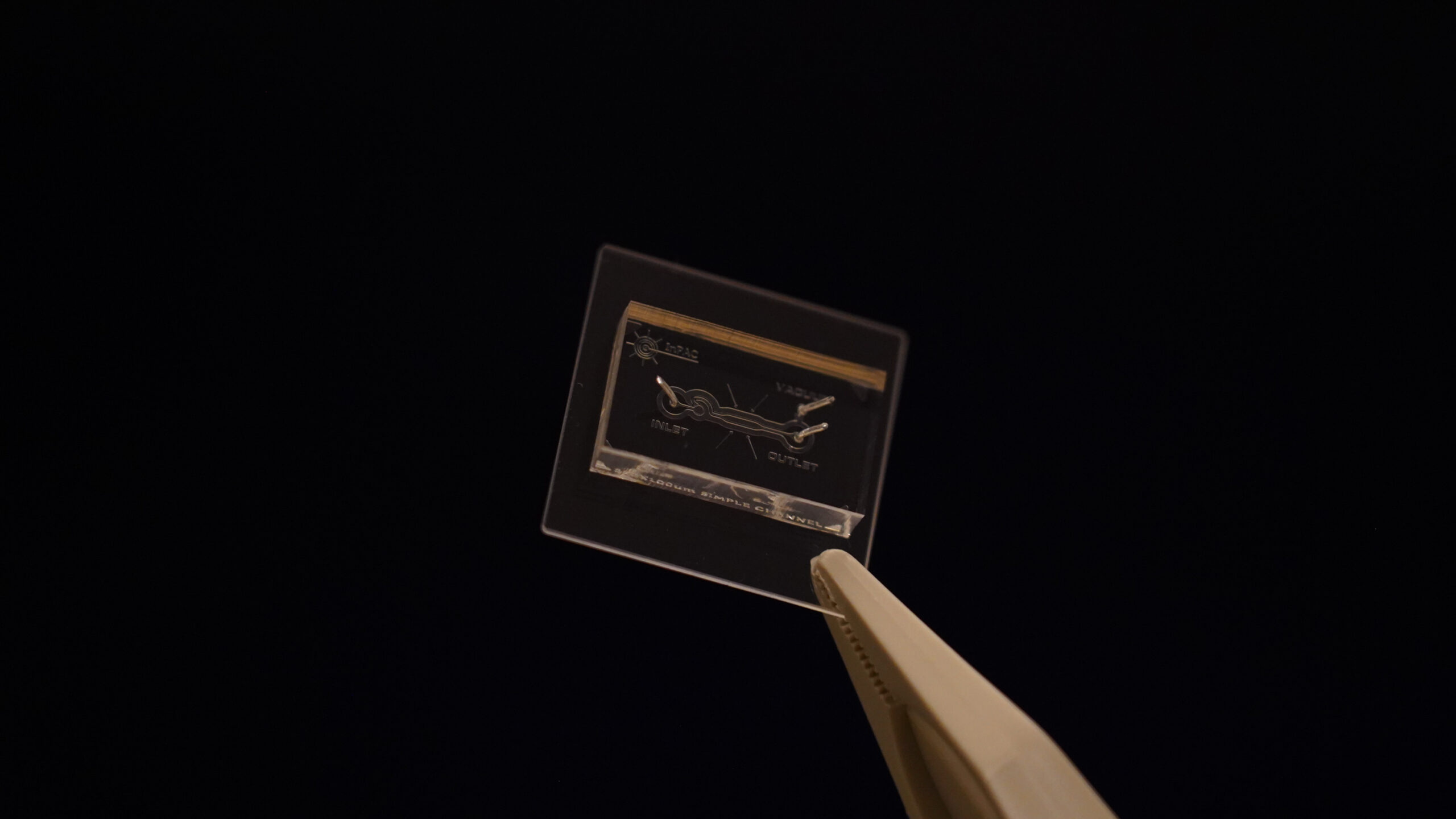
The researchers then demonstrated the method as a sensing tool by generating twisted light inside a microscopic fluid channel and observing how small changes in a liquid affected the light’s twist. Senior author and Director of Adelaide University’s Centre for Light for Life, Professor Kishan Dholakia, said this enabled refractive index measurements “with better than one part per million accuracy” using very small sample volumes.
The system was tested on sugar solutions and haemoglobin, a component of blood, which the researchers said showed its ability to analyse biologically relevant samples and its potential for future diagnostics. The results were published in Nature Communications.
First author Dr Chris Perrella from Adelaide University’s School of Biological Sciences said the technique could help support “faster, earlier diagnosis from just a drop of blood,” and indicated future versions could be integrated into compact devices using optical frequency combs to support rapid analysis of complex biological samples.
A photo caption accompanying the release described a chip combining microscopic spiral phase plates with a microfluidic channel to move and control small amounts of liquid.