

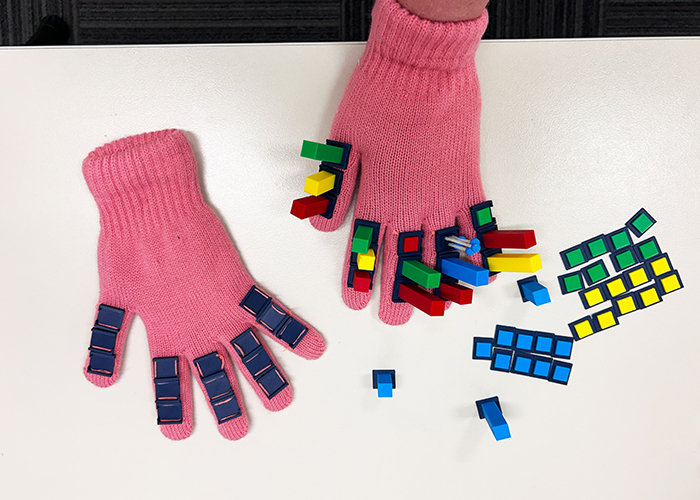
Researchers at the Adelaide University have developed a prototype wearable glove that uses heat, touch and physical objects to present data as a sensory experience, in work they say could support new ways of engaging with personal and potentially sensitive information.
The glove, called ThermoPhy, was created through a remote internship run by the Australian Research Centre for Interactive and Virtual Environments (IVE) at the Adelaide University. Intern Josh Joy developed the device in virtual collaboration with supervisors, combining wearable technology with data visualisation to convey information through temperature and touch as well as sight.
The prototype was demonstrated at the 20th International Conference on Tangible, Embedded and Embodied Interaction (TEI 2026) in Chicago.
IVE lecturer Dr Adam Drogemuller said the project explores alternatives to conventional screen-based charts and graphs. “Most data today is presented on screens as charts, graphs and numbers,” Dr Drogemuller said. “We wanted to investigate whether data could be experienced in a more personal and embodied way, using physical sensations such as warmth.”
ThermoPhy uses two types of displays: small 3D-printed tokens on the outside of the glove that can represent common visualisations such as bar charts, line graphs and heatmaps, and heating elements inside the glove that wrap around the fingers to generate controlled thermal sensations.
The researchers said the design could allow information to be communicated publicly via the visible physical elements while also delivering private information through heat that only the wearer experiences. “Unlike information shown on a screen, thermal feedback is only perceived by the person wearing the device, making it potentially useful for representing sensitive or emotional information,” Dr Drogemuller said.
The team suggested applications for human-centred data such as mood, stress and wellbeing. Example scenarios included using physical bars to represent hours slept, with heat reflecting mood on waking, or indicating discomfort levels in crowded spaces through temperature changes.
The project also explored potential empathy-driven use cases, such as allowing others to wear the glove to experience thermal feedback associated with another person’s data. Adelaide University researcher Xiaojiao ‘Lily’ Du said the work aligns with “data humanism”, which aims to make data more relatable and emotionally meaningful. “Data often becomes abstract and disconnected from human experiences,” she said. “We are interested in ways that bring people back into the process of understanding data through physical interaction, reflection and storytelling.”
The researchers estimated the electronic components cost about AUD$28, positioning the prototype as relatively low-cost for ongoing research. Future work will examine how people perceive different temperature ranges, how thermal feedback affects interpretation, and potential integration with augmented reality.
‘Just Warming Up: Exploring Heat and Wearables for Data Physicalisation’ was presented at TEI 2026 in Chicago, USA.