
A study led by Flinders University suggests the ability of bacteria to remove pollutants from soil, water, mine waste and other environments could be enhanced by using compatible viruses known as lysogenic bacteriophages.
The research, published in Communications Biology, examines “phage bioaugmentation” as a potential approach for environmental biotechnology, using bacteriophages that integrate into bacterial genomes without immediately killing their hosts. The study argues that these phages can contribute pollutant-degrading genes that improve bacterial capacity for bioremediation.
Traditional bioaugmentation methods are often described as cost-effective and sustainable, but can be limited by slow degradation rates and environmental constraints that reduce microbial performance in the field, the researchers say.
Pollution of natural ecosystems remains a global concern, with industrial activity contaminating large numbers of soil and water sites. The release notes that contaminants can threaten human health, agricultural productivity and ecological balance.
The release lists pollutants including arsenic, chromium, polychlorinated biphenyls, pesticides, petroleum hydrocarbons and excess nutrients. It says these can disrupt microbial communities important for soil health and nutrient cycling, degrade groundwater quality and threaten drinking water resources.
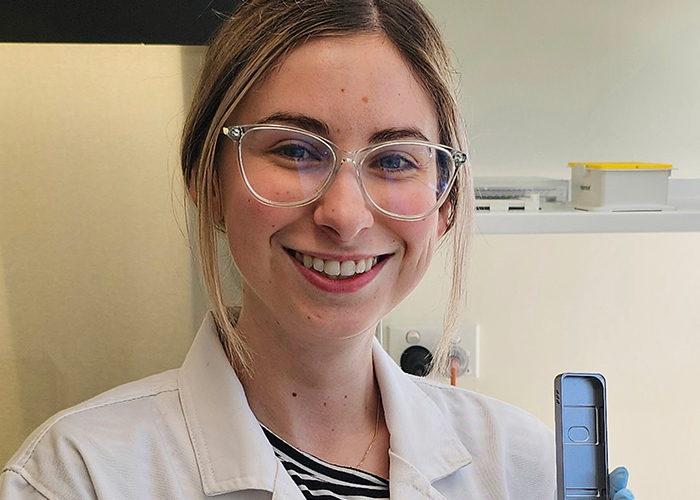
Flinders University researcher Niki Romeo says it can take years for microbes to break down toxins and pollutants, and that lysogenic phages may integrate auxiliary metabolic genes (AMGs) into bacterial hosts to improve degradation, potentially addressing cost and practical limits of some in-situ remediation approaches.
The researchers say regulatory frameworks would need to develop alongside such biotechnologies to assess ecological safety, genetic stability and long-term impacts of releasing engineered phages into natural environments.
“Issues such as gene transfer potential, persistence, containment, and unintended effects on non-target organisms will need to be addressed through biosafety protocols and environmental risk assessments before field-scale deployment,” says Flinders University PhD candidate Niki Romeo.
The release says further work is needed through field experiments to validate effective candidate phages for in-soil use, and to develop monitoring tools for phage integration and AMG expression.
“If used well, phage bioaugmentation could be used in controlled conditions to help restore polluted environments and promote microbial resilience,” she says.
The university says the work aligns with other bacteriophage research led by the Flinders Accelerator for Microbiome Exploration and the Restoration Ecology group in the College of Science and Engineering.
Matthew Flinders Professor Martin Breed, who co-supervises Ms Romeo’s PhD, says soil remediation and ecosystem restoration are important to improving living conditions for humans and other life, and points to urban soil biodiversity supporting functions including nutrient cycling, plant growth and pathogen suppression.
The mini review article, ‘Phage bioaugmentation reveals the potential of lysogeny for soil bioremediation’ (2026) by Niki Romeo, Ernestina Hauptfeld (Utrecht University), Qi Yang (CSIRO) and James G Mitchell, has been published in Communications Biology (DOI: 10.1038/s42003-026-10106-1).
Acknowledgements: The research is supported by a Playford Memorial Trust and Thyne Reid Foundation PhD scholarship to NR and a European Research Council grant to EH. Thanks to the South Australian Environmental Protection Agency for support.