

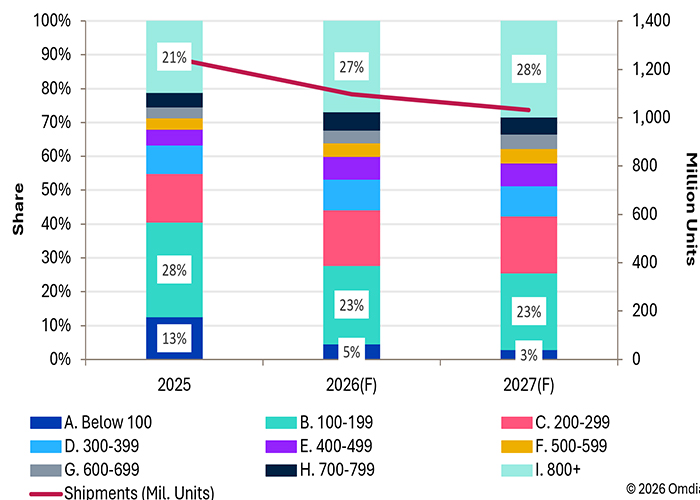
Global smartphone shipments are forecast to fall 12% year-on-year to 1,097 million units in 2026, according to new research from Omdia, as demand weakens for entry-level devices and affordability constraints persist in emerging markets.
Despite the expected decline in volumes, Omdia forecasts the total value of the market will rise 12% to $651.6 billion, driven by higher average selling prices. The firm projects smartphone ASPs will increase 27% in 2026 to $594.
Omdia’s analysis points to a changing mix of devices sold globally, with lower-cost segments shrinking and premium models taking a larger share. It expects the sub-$200 segment to fall from 40.6% of total shipments in 2025 to 25.6% in 2027, while the $800-plus segment increases from 21.1% to 28.4% over the same period. By 2027, Omdia forecasts global smartphone ASPs will rise 33% from $467 to $624.
The firm also expects a steep decline in the ultra-budget tier. The sub-$100 segment is forecast to drop from 12.6% of shipments in 2025 to 3.0% in 2027, while the $100–199 segment falls from 28.0% to 22.6%. Omdia expects mid-range devices priced between $200 and $699 to hold roughly 40% to 41% of the market, with devices priced $700 and above accounting for about one-third of global shipments.
“We are seeing a clear shift in the smartphone price pyramid,” said Jusy Hong, Senior Research Manager at Omdia. “The broad base of affordable devices is narrowing, while premium tiers are accounting for a larger share of the market. By 2027, premium devices priced above $800 are expected to represent a larger share of shipments than all sub-$200 devices combined. The changes taking place today are likely to shape smartphone portfolios, pricing strategies and consumer choices over the longer term.”
Omdia attributed the shift to five factors: longer device lifecycles, growth in used and refurbished markets, affordability pressures, vendor focus on profitability over volume, and the maturation of smartphone technology.
According to the research, replacement cycles are extending beyond historical norms and are expected to continue lengthening through 2027 and beyond, lowering annual demand for new devices. Omdia said extended software support commitments from major vendors may also increase the appeal of premium devices compared with lower-priced models that receive shorter support.
The secondary smartphone market is also expanding, with higher prices for new devices adding momentum. Omdia noted that previous-generation premium phones can compete at price points similar to new lower-end models. It also cited structured trade-in and certified refurbishment programs run by major manufacturers and carriers as factors making refurbished premium devices more accessible.
Omdia said rising component costs are compounding affordability challenges, particularly in emerging markets where purchasing power has not kept pace with device prices. It highlighted Africa, India, Southeast Asia and Latin America as regions where higher smartphone prices could limit access for many buyers, and said financing and subsidy programs are increasingly being used to support purchases, though their effectiveness varies where consumer credit is limited.
The research also points to changes in vendor strategy, with some manufacturers reducing exposure to lower-margin entry-level segments to prioritise profitability and product mix, even at the cost of lower shipment volumes.
“The strategic balance is shifting,” Hong added. “Vendors are increasingly focused on sustainable growth, a healthier product mix and stronger profitability, rather than pursuing shipment share alone.”
Omdia said technology improvements are becoming more incremental, with mid-range chips and features increasingly narrowing the gap with flagship devices. It cited advances including improved computational photography, wider adoption of high-refresh-rate OLED displays, and better battery life and build quality across price bands as factors reducing the need for performance-driven upgrades.