

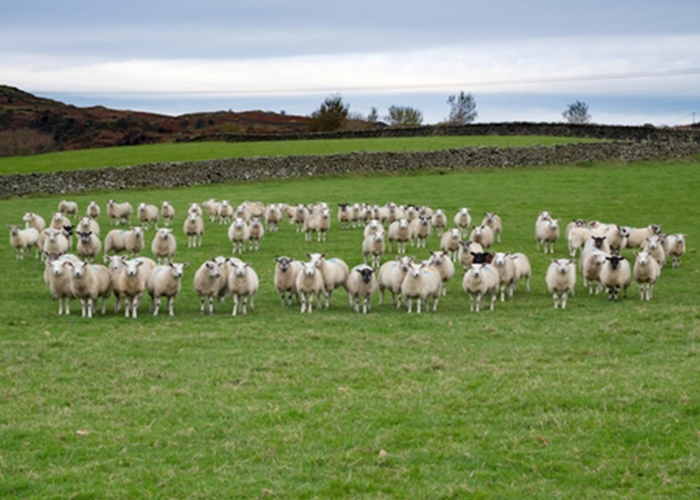
CSIRO is developing a sensor-based system designed to estimate sheep liveweight and fleece weight in real time without the need for manual handling.
The project, called FlockMate, is a two-year research effort co-funded by Meat & Livestock Australia, Australian Wool Innovation and CSIRO. The agency said the system is intended to capture measurements as animals move naturally through their environment.
Liveweight includes both the animal and its fleece and is used by producers to assess feed availability, animal health and production stages such as lambing and sale readiness. CSIRO said current approaches can be difficult to apply consistently across a whole flock because they often require labour-intensive handling or depend on animals engaging with weighing systems, which can lead to incomplete data.
CSIRO Principal Research Scientist Dr Sabrina Greenwood said the goal is to enable more regular monitoring across the growth cycle.
“Keeping track of liveweight can tell producers a lot about what’s happening to their sheep, whether that’s how the flock is responding to seasonal conditions or how they’re tracking through production stages,” Dr Greenwood said.
“Making those measurements easier and more frequent will help producers spot these changes sooner, meaning more informed decisions can be made across their flock.”
CSIRO Quantitative Imaging Team Leader Dr Xun Li said the system uses a multimodal sensor setup to capture high-resolution 3D images of individual animals when they come into view. According to CSIRO, AI and computer vision algorithms then analyse the data to estimate body volume, liveweight and fleece weight, with measurements linked to the animal’s Radio-Frequency Identification tag.
“Advanced AI and computer vision algorithms then analyse these data to generate accurate estimates of body volume, liveweight and fleece weight, with each measurement automatically associated with the animal’s Radio-Frequency Identification (RFID) tag,” said Dr Li.
“This enables frequent, non-invasive monitoring without interrupting normal farm operations.”
CSIRO said early prototypes are being developed at its Chiswick Research Station in New South Wales, a 1,500-hectare property with a Merino flock of about 2,700 breeding ewes. The work also draws on insights from the Sustainable Chiswick Project, which CSIRO described as a separate initiative focused on on-farm sustainability and innovation, including sustainability frameworks and traceability, biodiversity, animal welfare benchmarking and the use of sensors and data for decision-making.
Dr Greenwood said testing results and input from more than 20 producers are informing the system’s design.
“We’ve worked closely with producers to understand how they would use a system like this on farm, and that input has been crucial in shaping the design,” Dr Greenwood said.
“Their feedback has ensured that the system is practical and reflects the real on-farm conditions that producers are working in.”
CSIRO said the team will continue working with producers and supply chain stakeholders to support adoption at scale. While the current focus is sheep, CSIRO said the research could later be applied to cattle and other livestock industries.
CSIRO researchers will represent FlockMate at LambEx 2026 at the Adelaide Convention Centre from 7–8 July 2026.