

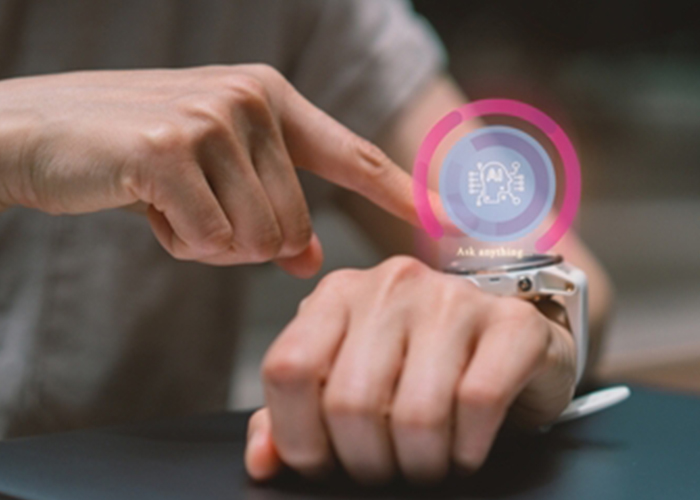
AI-powered wearable devices are increasingly being positioned as personal assistants, expanding beyond health and activity tracking, according to a new report from GlobalData.
The report, titled “AI is Moving Wearables from Personal Tracking to Personal Assistance, Raising the Stakes for Privacy,” argues that new AI-enabled devices are being designed to take actions on users’ behalf, while raising questions about how much access these products have to private lives and bystanders.
Amanda Mitchell, Senior Analyst – Telecoms Practice at GlobalData, said the shift includes capabilities such as booking travel, shopping, dictating notes, replaying parts of conversations and delivering personalised coaching without relying on a phone. She added that new AI-capable wearables are launching “almost weekly,” including smart glasses, rings, clip-on devices and watches.
GlobalData said the market spans both major technology vendors and specialist wearable makers. It pointed to Apple, Google and Samsung expanding AI assistance across phones and wearable devices, Meta developing smart glasses and its personal AI agent, Muse, and Oura and WHOOP focusing on personalised health guidance.
The release also cited AI-first products such as Amazon’s Bee, which can be worn on the wrist or clipped on, and is presented as a tool for organisational tasks including capturing conversations and converting them into reminders.
Mitchell said the expansion of always-available assistance brings heightened privacy risks, including the potential for smart glasses to record people who may not know they are being filmed and for other wearables to access microphones, health data, email, calendars and conversations. She noted Meta’s response to consumer pressure to make recording indicators on its smart glasses more resistant to tampering, while arguing that the broader industry is moving faster to release devices than to address how invasive they may be.
Mitchell also pointed to emerging regulatory attention. She said that in October the European Data Protection Board called for recording cues that are difficult to miss, and stated that manufacturers cannot shift privacy obligations solely onto wearers. She added that bans and restrictions are emerging in countries including Norway and Australia.